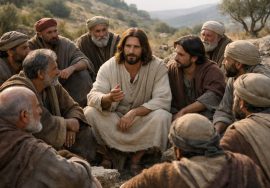


STAY FOCUSED, KEEP MOVING, AND TRUST GOD’S GRACE
When Worry Knocks: A Lesson in Faith, Focus, Forward Movement, a story of two minds and one lesson
Life is a journey filled with moments of joy, opportunities for growth, and seasons of unexpected challenges. Along the way, every person encounters disappointments, setbacks, failures, delays, and painful memories. Yet one of the greatest lessons we can learn is this: no matter how much it hurts, stay focused and keep moving forward.
Many people spend valuable time dwelling on the mistakes of yesterday or becoming anxious about the uncertainties of tomorrow. Unfortunately, worry changes nothing. It cannot rewrite the past, nor can it guarantee the future. Instead, worry often becomes a thief of peace, joy, productivity, and emotional well-being. It consumes the energy that could otherwise be invested in growth, purpose, faith, and progress.
The past has fulfilled its purpose and cannot be relived. Yesterday is gone. Today, however, is a precious gift from God—a fresh opportunity filled with new possibilities, lessons, and victories waiting to be discovered. Rather than allowing yesterday’s disappointments to dominate today’s opportunities, we must choose to embrace the present with faith, courage, gratitude, and determination.
The Power of Focus
One of the most powerful principles for success and personal growth is maintaining focus. Wherever focus goes, energy flows; and wherever energy flows, growth follows.
What you consistently focus on eventually shapes your thoughts, attitudes, actions, character, and destiny. If you focus on fear, fear will grow. If you focus on problems, problems will appear larger than they truly are. However, when you focus on purpose, opportunities, solutions, and God’s promises, you position yourself for progress and success.
Successful people understand this principle. Regardless of their circumstances, they remain committed to their goals. They refuse to be distracted by temporary setbacks, negative voices, criticism, or unhealthy comparisons. Instead, they keep moving forward, one step at a time.
Psychologically, focus strengthens resilience. It helps individuals develop emotional stability, reduces unnecessary anxiety, and improves decision-making. People who concentrate on what they can control are generally more productive, healthier, and happier than those who constantly worry about matters beyond their influence.
Understanding What You Can and Cannot Control
One of the greatest sources of frustration in life is attempting to control things that are beyond our control. We cannot control every circumstance, every opinion, every delay, or every event that may occur tomorrow.
However, we can control:
Our attitude.
Our response to challenges.
Our decisions.
Our actions.
Our commitment to personal growth.
Our trust in God.
When we focus our energy on what we can influence and release what we cannot, we preserve our emotional and mental strength. Anything else becomes an unnecessary burden.
As the Serenity Prayer wisely teaches:
“Grant me the serenity to accept the things I cannot change, the courage to change the things I can, and the wisdom to know the difference.”
A Story of Two Minds and One Lesson
Kofi had always been a thoughtful young man. In his village, people often remarked that he “lived inside his head.” He carefully planned his future, analysed situations, and tried to anticipate every possible challenge before it arrived.
However, what began as thoughtful planning gradually turned into excessive worrying.
One evening, after learning that his application for further studies had been delayed, Kofi sat alone on a roadside bench near his home. The evening sky glowed with shades of orange and gold. While the world around him seemed calm, his mind was racing.
“What if I don’t get the admission?” he whispered.
“What if I fail again? What if everything I’ve worked for falls apart?”
As he sat there, an elderly trader named Ama approached. She was well known in the community for her wisdom and gentle manner.
Stopping beside him, she smiled and said:
“Young man, you look like someone carrying a bag full of invisible stones.”
Kofi forced a smile.
“It’s worry,” he replied. “It won’t leave me alone.”
Ama nodded knowingly.
“Then let me share something I once heard, a piece of wisdom often attributed to the East.”
She sat beside him and quietly said:
“If you have a problem and you can solve it, there is no need to worry. If you cannot solve it, worrying will do you no good.”
Kofi sighed.
“It doesn’t feel that simple.”
“It rarely does,” Ama replied. “But tell me, which part of your situation can you solve right now?”
Kofi thought carefully.
“I can follow up on my application. I can improve my preparation. I can continue learning.”
“And what part can you not control?”
“The final decision,” he answered.
Ama smiled.
“Then why are you spending your strength on what you cannot control?”
The question lingered in Kofi’s mind.
Seeing that he was still troubled, Ama continued:
“Worrying does not empty tomorrow of its troubles; it empties today of its strength.”
The words struck him deeply.
Before leaving, she shared one final thought:
“A bird does not fear the branch breaking because its trust is not in the branch but in its wings.”
The Turning Point
That night, Kofi struggled to sleep. The sayings echoed repeatedly in his mind.
The next morning, seeking peace, he visited a small church nearby.
As he entered, he heard the pastor reading from Scripture:
“Cast all your anxiety on Him because He cares for you.” (1 Peter 5:7)
Later, another passage followed:
“Therefore do not worry about tomorrow, for tomorrow will worry about itself. Each day has enough trouble of its own.” (Matthew 6:34)
For the first time, Kofi realised that while his circumstances had not changed, his perspective could.
His delayed application remained unresolved.
The uncertainty remained.
But a door of understanding had begun to open within him.
He finally understood that he had been carrying tomorrow’s burdens while neglecting today’s responsibilities.
Action Instead of Anxiety
Over the following weeks, Kofi changed his approach to life.
Instead of replaying fearful scenarios in his mind, he took practical action. He followed up on his application, improved his documents, explored alternative opportunities, and prepared for different outcomes.
Most importantly, he stopped punishing himself with imaginary fears.
Gradually, he discovered another timeless truth:
“A journey of a thousand miles begins with a single step.”
He realised that life was not asking him to see the entire road ahead. It was simply asking him to take the next faithful step.
He also embraced another valuable lesson:
“The best time to plant a tree was twenty years ago. The second-best time is now.”
Rather than mourning lost opportunities, he chose to make the most of the opportunities before him.
The Biblical Perspective on Worry
The Bible consistently teaches believers to replace worry with trust in God.
Jesus Himself instructed:
“Therefore I tell you, do not worry about your life…” (Matthew 6:25)
The Apostle Paul wrote:
“Do not be anxious about anything, but in every situation, by prayer and petition, with thanksgiving, present your requests to God.” (Philippians 4:6)
These verses do not suggest that challenges will disappear. Rather, they remind us that God is greater than our challenges.
Faith is not the denial of reality; it is confidence in God’s presence and power despite reality.
Peace is not the absence of problems. Peace is the presence of trust.
God’s Grace Is Sufficient
Perhaps the greatest comfort for every believer is the assurance of God’s grace.
Life will present obstacles. There will be seasons of weakness, disappointment, uncertainty, and waiting. Yet God’s grace remains sufficient through them all.
The Apostle Paul testified in 2 Corinthians 12:9:
“My grace is sufficient for you, for My power is made perfect in weakness.”
When our strength fails, God’s strength sustains us.
When the road becomes difficult, His grace carries us.
When uncertainty surrounds us, His presence guides us.
When worry knocks at the door of our hearts, His peace answers.
Final Reflection
The lesson is simple yet profound:
If a problem can be solved, it deserves action, not anxiety.
If a problem cannot be solved immediately, it deserves prayer, not panic.
Life is too precious to be wasted on constant worry. Every day is an opportunity to learn, grow, serve, love, and make a meaningful impact.
Therefore, stay focused.
Keep moving forward.
Refuse to be imprisoned by the past.
Embrace each day with faith, gratitude, and hope.
Trust God completely, and remember that His grace will always be sufficient for you.
“My grace is sufficient for you, for My power is made perfect in weakness.” — 2 Corinthians 12:9
References
The Holy Bible, New International Version. (2011). Biblica. Zondervan.
Niebuhr, R. (1951). The serenity prayer. In The wisdom of the heart. Harper & Brothers.
Covey, S. R. (2004). The 7 habits of highly effective people: Powerful lessons in personal change. Free Press.
Maxwell, J. C. (2007). The 21 indispensable qualities of a leader: Becoming the person others will want to follow. Thomas Nelson.
Frankl, V. E. (2006). Man’s search for meaning. Beacon Press. (Original work published 1946)
Sylvanus Yao Kpodonu
Counsellor | Motivational Writer | Christian Minister
Founder, SkySeriesGH.com