
EFFECTIVE LEADERSHIP: THE JESUS APPROACH AND EXAMPLE
A Biblical Model for Transformational Leadership in the 21st Century
By Rev. Sylvanus Kpodonu.
In an age where leadership crises continue to affect families, churches, organisations, and nations, the need for effective, godly, and transformational leadership has become more important than ever. Many people occupy positions of authority, yet very few truly influence lives positively or leave lasting legacies. Leadership today requires more than power, titles, or popularity; it requires character, vision, wisdom, humility, discipline, and service.
Among all leadership models throughout history, Jesus Christ remains the greatest example of effective leadership. His leadership style transformed ordinary people into world changers and continues to influence humanity centuries after His earthly ministry. Jesus demonstrated leadership that was spiritual, visionary, sacrificial, compassionate, and people-centred.
Modern leadership theories such as transformational leadership, servant leadership, and visionary leadership all reflect principles that were perfectly demonstrated by Jesus Christ long before they became academic concepts. His life therefore offers practical lessons for political leaders, church leaders, teachers, parents, administrators, youth leaders, and professionals in every field of life.
Effective leadership is not accidental; it is intentional. It involves preparation, personal growth, emotional intelligence, resilience, integrity, accountability, and the ability to inspire others toward a common purpose. Leadership also demands continuous learning because the world is constantly changing. In the 21st century, leaders must be adaptable, technologically aware, emotionally mature, and spiritually grounded.
This article explores key leadership qualities demonstrated by Jesus Christ and how contemporary leaders can apply them effectively in today’s world.
1. A PREPARED LEADER
Jesus Christ spent approximately thirty years preparing before publicly entering ministry. Rather than growing within ministry without preparation, He first grew into ministry through discipline, learning, spiritual formation, and obedience to God.
Many leaders today struggle to perform effectively because they assume leadership roles without adequate preparation or training. As a result, they often rely on “trial and error” methods, lacking a clear understanding of the responsibilities attached to their positions.
The Gospel of Luke highlights three major areas of Jesus’ growth:
“And the child grew and became strong; he was filled with wisdom, and the grace of God was on him” (Luke 2:40, New International Version).
This verse reveals the holistic development of Jesus:
Physical Growth
Jesus developed physically like every human child, demonstrating His humanity and discipline.
Intellectual and Spiritual Growth
He grew in wisdom and understanding, especially concerning spiritual matters and the Scriptures.
Divine Grace
The grace and favour of God rested upon Him, indicating divine approval and empowerment through the Holy Spirit.
These dimensions of growth were nurtured through:
Prayer
Diligent study of the Word of God
Waiting upon God
Obedience and spiritual discipline
Effective leaders must therefore invest time in preparation, learning, mentorship, and personal development before assuming leadership responsibilities.
2. A SPECIAL LEADER
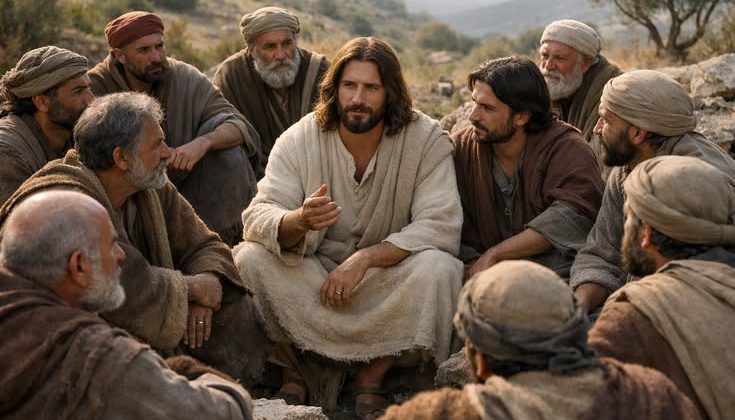
Jesus Christ was not merely a leader with followers; He was a leader who raised other leaders. He intentionally called and trained His disciples with purpose and vision.
Jesus said to Peter and Andrew:
“Follow me, and I will make you fishers of men” (Matthew 4:19).
Leadership is not measured only by the number of followers one has, but by the number of leaders one develops. Leadership expert John C. Maxwell rightly stated:
“To add growth, lead followers; to multiply growth, lead leaders.”
Jesus remained focused on His divine assignment despite opposition, temptation, criticism, and distractions. He overcame the temptations of the devil (Matthew 4:1–10), refused political manipulation when people wanted to forcefully make Him king (John 6:14–15), and remained committed to the mission of the Cross even when Peter attempted to discourage Him (Matthew 16:21–23).
This teaches modern leaders the importance of emotional stability, self-discipline, focus, and commitment to purpose.
Effective leaders must understand:
Their vision
Their mission
Their values
Their strengths and weaknesses
Their purpose in leadership
Reflection Questions
What plans do you have as a leader in your group or organisation?
Why are you part of the group or organisation?
What values guide your life and leadership?
3. A VISIONARY LEADER
A visionary leader is one who sees beyond the present and inspires others toward a greater future. Jesus Christ exemplified visionary leadership throughout His earthly ministry. He understood His mission clearly and remained committed to fulfilling the will of God despite opposition, suffering, and rejection.
Jesus declared His purpose when He said:
“For the Son of Man came to seek and to save the lost” (Luke 19:10).
His vision was centred on the salvation, transformation, and restoration of humanity. Every action He took aligned with this divine purpose. He taught the people, healed the sick, raised disciples, confronted injustice, and ultimately sacrificed Himself on the Cross for the redemption of the world.
Visionary leaders:
See possibilities where others see limitations
Inspire hope during difficult times
Remain focused despite challenges
Build people for the future
Create positive and lasting impact
In today’s rapidly changing world, visionary leaders must be proactive rather than reactive. They must think strategically, embrace innovation, and prepare future generations for greater responsibility.
As Proverbs 29:18 states:
“Where there is no vision, the people perish” (King James Version).
Vision gives leadership direction, purpose, sustainability, and relevance.
4. A SERVANT LEADER
Jesus Christ demonstrated servant leadership through humility and service. In John 13:1–15, He washed the feet of His disciples, an act usually reserved for servants.
Love and humility are central characteristics of servant leadership. Although Jesus is the Son of God, He humbled Himself and served humanity selflessly.
Today, many leaders seek recognition instead of responsibility and control instead of service. However, true leadership is rooted in humility, empathy, and genuine concern for people.
A good leader:
Serves rather than dominates
Leads with humility
Demonstrates love and compassion
Respects followers
Encourages rather than insults others
Builds trust and unity
Leaders who constantly abuse, intimidate, or disrespect their followers destroy morale and weaken organisational growth.
5. A SACRIFICIAL OR SELFLESS LEADER
Jesus Christ paid the ultimate price through His sacrificial death on the Cross. His leadership involved self-denial, suffering, and total commitment to God’s mission.
Leadership always requires sacrifice. Effective leaders often give up comfort, convenience, and personal gain in order to pursue a greater purpose.
John C. Maxwell stated:
“A leader must give up to go up.”
Leadership sacrifice may involve:
Time
Money
Energy and effort
Personal rights and comfort
Reputation
Even life itself
The greater the assignment, the greater the sacrifice and responsibility.
6. A DELEGATING LEADER
Jesus Christ empowered His disciples and delegated authority to them. Before His ascension, He commissioned them to continue His mission:
“Go therefore and make disciples of all nations” (Matthew 28:18–20).
Effective leaders understand that leadership is not about controlling everything personally. Wise leaders empower others, build trust, mentor younger leaders, and create opportunities for growth.
Delegation:
Builds confidence
Encourages teamwork
Develops future leaders
Enhances productivity
Ensures continuity
Leadership that refuses to empower others eventually collapses.
7. A GOOD LEADER AND FINISHER
Jesus Christ was a good finisher. He completed His mission faithfully and successfully.
True leadership is not measured merely by activity, popularity, or position, but by accomplishment and legacy. A leader’s value is ultimately reflected in the people he or she develops and leaves behind.
The Apostle Paul the Apostle advised Timothy:
“And the things you have heard me say in the presence of many witnesses entrust to reliable people who will also be qualified to teach others” (2 Timothy 2:2).
Leadership is about succession and legacy. Effective leaders invest in people and prepare the next generation.
There is no magical formula for becoming an effective leader overnight. Leadership development is a continuous process involving:
Learning
Experience
Failures
Growth
Correction
Perseverance
CONCLUSION
The future of every church, organisation, family, and nation depends greatly on the quality of its leadership. Our world today desperately needs leaders who are spiritually grounded, morally disciplined, emotionally intelligent, visionary, humble, and selfless.
The leadership model of Jesus Christ remains relevant in every generation because it focuses on service, transformation, sacrifice, integrity, and people development. Leadership is not about being served; it is about serving faithfully and impacting lives positively.
Beloved, strive to finish well and leave behind a legacy that will inspire generations yet unborn.
Principles for Effective Leadership
A. Work Joyfully
Since approval ultimately comes from God (Ecclesiastes 9:7–9).
B. Work Energetically
Even when results seem uncertain (Ecclesiastes 9:10–13).
C. Work Wisely
With the understanding and perspective God gives (Ecclesiastes 9:13–18).
May God raise a new generation of visionary, humble, disciplined, and transformational leaders for His Kingdom and for society.
God bless you.
References.
John C. Maxwell. (2005). Developing the leaders around you. Thomas Nelson.
Maxwell, J. C. (2007). The 21 irrefutable laws of leadership (10th anniversary ed.). Thomas Nelson.
Blanchard, K., & Hodges, P. (2003). Lead like Jesus: Lessons from the greatest leadership role model of all time. Thomas Nelson.
Sanders, J. O. (2017). Spiritual leadership: Principles of excellence for every believer (Updated ed.). Moody Publishers.
Wright, N. T. (2012). Simply Jesus: A new vision of who he was, what he did, and why he matters. HarperOne.
The Holy Bible, New International Version. (2011). Biblica.
The Holy Bible, King James Version. (1769/2017). Cambridge University Press.