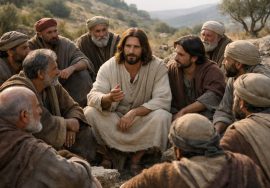


UNITED IN PURPOSE
Beloved in Christ, one of the greatest threats to the Church today is not persecution, poverty, or lack of resources. The greatest threat is disunity—division in hearts, in vision, and in purpose.
God does not bless confusion; God blesses unity. When the people of God are united in purpose, the Church becomes unstoppable.
Today’s theme is “United in Purpose.” The Scriptures before us reveal that unity is not merely a good idea—it is a spiritual necessity. Let us examine the texts systematically.
1. JESUS PRAYED FOR UNITY (John 17:1–11)
This passage takes us to the final moments of Jesus before His suffering. In John 17, Jesus lifted His eyes to heaven and prayed.
This prayer was not about material prosperity.
It was not about long life.
It was not about earthly comfort.
Jesus prayed for something deeper: the unity of His disciples.
In verse 11, Jesus declared:
“Holy Father, keep through Your name those whom You have given Me, that they may be one as We are.”
This statement is soul-searching. Jesus knew that after His departure, the disciples would face confusion, fear, spiritual attacks, and intense pressure. He understood that if they were not united, they would collapse.
Christ’s unity with the Father was His strength, and He desired that same unity for His followers.
It is important to note that unity is not uniformity. The disciples were different in personality and background—Peter was outspoken, John was gentle, Thomas doubted, and Matthew was a former tax collector. Yet Jesus prayed that despite their differences, they would remain one.
Application
If Jesus prayed for unity, why do we take division lightly?
If Christ’s last prayer included unity, then disunity is not a small matter—it is a serious spiritual issue.
The question is: Are we united in God’s purpose, or united only when it benefits us?
2. UNITY PRODUCES OBEDIENCE AND PRAYER (Acts 1:6–14)
In Acts 1, Jesus had risen from the dead and was preparing to ascend into heaven. In verse 6, the disciples asked Him:
“Lord, will You at this time restore the kingdom to Israel?”
Their minds were still focused on politics and earthly restoration. They desired power, national greatness, and visible rulership. But Jesus redirected them to the divine agenda.
In verse 8, He said:
“You shall receive power when the Holy Spirit has come upon you; and you shall be witnesses to Me…”
Jesus was teaching them that their purpose was not political—it was spiritual. They were not called to rule Jerusalem; they were called to witness to the world.
After this, Jesus ascended into heaven (v.9). Then in verse 14, Scripture records a remarkable testimony:
“These all continued with one accord in prayer and supplication…”
This is the evidence of true unity: they prayed in one accord.
They did not scatter.
They did not fight over leadership.
They did not blame Peter for denying Jesus.
They did not reject Thomas for doubting.
Instead, they stayed together.
The Bible further notes that they prayed:
“…with the women, and Mary the mother of Jesus…”
This teaches us that unity was not limited to apostles alone. It included men and women, leaders and followers, disciples and ordinary believers.
The early Church was united, not because they had everything, but because they had one purpose: to wait for the Holy Spirit and fulfil the mission of Christ.
Beloved, unity is not proven during celebration. Unity is proven during waiting. Many people can worship together, but not many can wait together in prayer with one heart.
3. UNITY MUST SURVIVE SUFFERING (1 Peter 4:12–16)
The Apostle Peter wrote to believers who were experiencing severe persecution. He encouraged them in verse 12:
“Beloved, do not think it strange concerning the fiery trial…”
In other words, suffering is not abnormal for Christians. Trials are part of the Christian journey.
In verse 14 he adds:
“If you are reproached for the name of Christ, blessed are you…”
Peter teaches that when the Church suffers, it must not scatter. It must remain united.
Suffering has a way of dividing people. Some begin to blame the Church. Some abandon the faith. Some accuse leaders. Some grow bitter. But Peter insists that believers must remain faithful, and if they suffer, it should be for Christ—not for wrongdoing.
Verse 16 declares:
“If anyone suffers as a Christian, let him not be ashamed, but let him glorify God…”
This means unity is tested in the fire.
Many churches do not break because of false doctrine, but because of hardship—financial struggles, internal conflicts, persecution, delays, disappointments, and misunderstandings.
However, the Church that is united in purpose will boldly say:
“We may be pressured, but we will not be divided.”
“We may suffer, but we will not quit.”
KEY LESSONS: WHAT DOES IT MEAN TO BE UNITED IN PURPOSE?
1. Unity Begins with the Prayer of Christ
Before the Church was formed, Jesus prayed for unity. This means unity is spiritual, not emotional.
2. Unity Requires Submission to God’s Agenda
The disciples wanted national restoration, but Jesus gave them the mission of witness. Many Christians are united in personal agendas but divided in God’s mission.
3. Unity is Maintained Through Prayer
Acts 1:14 reveals the secret: one accord prayer.
A prayerless church is a divided church—and ultimately a dead church. A prayerless Christian is also a divided Christian and a spiritually weakened Christian.
4. Unity Must Stand Firm in Suffering
Peter teaches that persecution should not destroy the Church; rather, it should purify the Church and strengthen its witness.
SOUL-SEARCHING APPLICATION
Beloved, let us examine ourselves honestly:
Are we united only when things are going well?
Are we united in worship but divided in decisions?
Are we united in the church building but divided in our hearts?
Are we united in singing but divided in purpose?
Are we united in programmes but divided in vision?
God does not anoint confusion.
God does not empower division.
The Holy Spirit came when the disciples were in one accord. If we desire revival, we must return to unity.
CONCLUSION
Jesus prayed for unity.
The disciples practised unity in prayer.
The early Church maintained unity even in suffering.
Therefore, unity is not optional. It is the foundation for spiritual power, effective witness, and lasting victory.
May the Lord deliver us from selfishness, pride, bitterness, and unnecessary competition. Let us be united in purpose—to glorify Christ, to receive the power of the Holy Spirit, and to bear witness even through trials.
May we be one, so that the world will believe.
Amen.