
SUNDAY GOSPEL REFLECTION: BUILT ON THE CORNERSTONE, NOT ON OURSELVES
Exodus 20:1–20
Philippians 3:4–14
Matthew 21:33–46
Introduction
Beloved brothers and sisters in Christ, our theme for today is “Build on the Cornerstone, Not on Ourselves.”
In life, everyone is building something. Some are building careers, families, businesses, ministries and personal reputations. Others are building their lives on wealth, education, power, achievements or human wisdom.
However, the most important question is not what we are building but what foundation we are building upon.
A building may look beautiful and impressive, but without a solid foundation, it will eventually collapse. In the same way, a Christian life that is not firmly rooted in Jesus Christ cannot stand the tests and challenges of life.
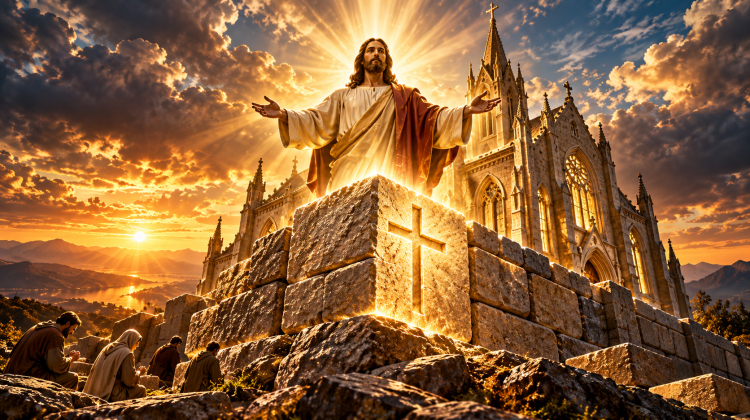
Jesus Christ is the true Cornerstone. He is the foundation of our salvation, our faith and our Christian living.
The Scriptures remind us that we must not place our confidence in ourselves but in God, who alone is the source of our strength and salvation.
In biblical times, the cornerstone was a principal stone laid at the foundation of a building. It determined the alignment, stability and direction of the entire structure.
In Matthew 21:42, Jesus refers to Himself as the stone rejected by the builders, which has become the chief Cornerstone.
This passage teaches us an important spiritual truth: the very One rejected by human beings is the One God has chosen to become the foundation of His redemptive plan.
Jesus Christ was rejected, crucified and buried, but God raised Him from the dead and exalted Him.
Therefore, building on the Cornerstone means:
Accepting Jesus Christ as Lord and Saviour.
Trusting in His finished work on the cross.
Obeying His Word.
Allowing Him to direct our decisions and actions.
Depending on His grace rather than our own abilities.
We cannot build a lasting Christian life without Christ.
“The stone which the builders rejected, the same is become the head of the corner.”
This statement points directly to Christ as the Cornerstone.
The religious leaders had become so attached to their authority, traditions and positions that they failed to recognise the Messiah standing before them.
Their rejection of Christ exposed the danger of religious pride and spiritual blindness.
Practical lesson: We must never allow our positions, traditions, influence or personal ambitions to prevent us from recognising and obeying Jesus Christ.
Let’s see Paul’s Testimony: Rejecting Self-Confidence
The Apostle Paul presents a powerful testimony about the danger of placing confidence in human achievements.
Before his conversion, Paul had many reasons to boast about his religious background and accomplishments. He was circumcised on the eighth day, belonged to the tribe of Benjamin, was a Hebrew of Hebrews and a Pharisee who zealously persecuted the Church.
From a human perspective, Paul had an impressive religious record.
However, after encountering Jesus Christ, his understanding of success and righteousness changed completely.
In Philippians 3:7–8, Paul declares that whatever he once considered gain, he now regards as loss because of Christ.
Paul discovered that religious status, personal achievements and human righteousness could never compare with the surpassing worth of knowing Jesus Christ.
His greatest desire was to know Christ, experience the power of His resurrection and participate in His sufferings.
Paul also makes it clear that he has not yet attained perfection. Instead, he presses on towards the goal of God’s heavenly calling in Christ Jesus.
This teaches us three important lessons:
Humility: Our achievements must never become a substitute for God’s grace.
Spiritual growth: Knowing Christ is a lifelong journey.
Perseverance: We must continue pressing towards the goal despite challenges and setbacks.
Paul’s testimony challenges Christians, church leaders and ministers to examine the foundations of their confidence.
Are we trusting in our titles, positions, education, experience and achievements, or are we depending on Jesus Christ?
Practical lesson: Our spiritual maturity is not measured merely by what we have achieved but by our relationship with Jesus Christ.
Some Ways to Build on the Cornerstone
To build our lives on Jesus Christ, we must practise the following:
1. Build on faith, not fear.
Faith enables us to trust God’s promises even when circumstances appear difficult. Fear may discourage us, but faith reminds us that Christ remains our foundation.
2. Build on obedience, not personal ambition.
Our desires and ambitions must be submitted to God’s will. We should seek His direction before making important decisions.
3. Build on humility, not pride.
Pride makes us believe that we can succeed without God. Humility reminds us that every good gift comes from Him.
4. Build on God’s Word, not human opinions.
Human opinions and philosophies change, but God’s truth remains dependable. The Bible must guide our beliefs, decisions and conduct.
5. Build on Christ’s grace, not personal achievements.
Our salvation does not come from our accomplishments, social status or religious positions. It is a gift of God’s grace through faith in Jesus Christ.
As individuals, we must ask ourselves whether our lives truly reflect the lordship of Jesus Christ.
As families, we must establish our homes on Christian values, love, forgiveness and prayer.
As church leaders, ministers and elders, we must remember that the Church belongs to Jesus Christ. We are servants entrusted with His work, not owners of His vineyard.
As congregations, we must resist division, jealousy, competition and the pursuit of personal recognition.
Our calling is to glorify Christ, proclaim the Gospel and demonstrate His love to the world.
We must also remember that building on Christ does not mean we will never face difficulties. Rather, it means that when storms come, we have a firm foundation that enables us to stand.
Conclusion
Beloved brothers and sisters, the central message of today’s reflection is clear: Built on the Cornerstone, not on ourselves.
Exodus 20 teaches us to honour God’s commandments and live in obedience to Him.
Philippians 3 reminds us that our confidence must not rest on human achievements but on knowing Jesus Christ.
Matthew 21 warns us against rejecting God’s authority and failing to recognise Jesus as the chosen Cornerstone.
Together, these passages challenge us to reconsider the foundations of our lives.
Let us not build our faith on wealth, power, education, titles, human wisdom or personal accomplishments.
Let us build on Jesus Christ, the One who was rejected but has become the chief Cornerstone.
When Christ is our foundation, our faith becomes stronger, our obedience becomes meaningful and our hope remains secure.
May the Lord help us to build wisely, live faithfully and remain firmly rooted in Jesus Christ until the end.
Amen.
Rev. Sylvanus Yao Kpodonu
(SKY)