

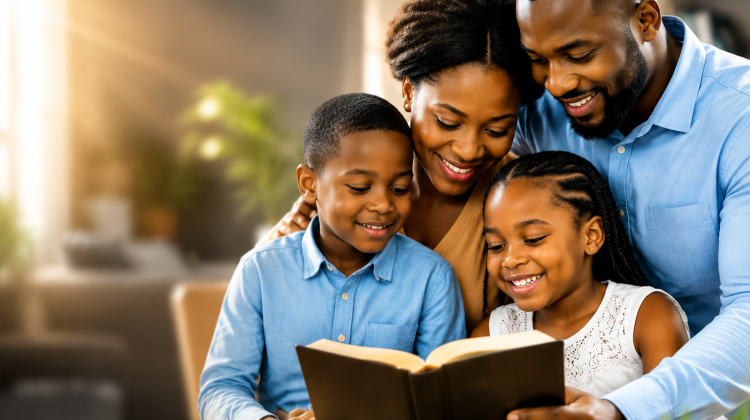
POSITIVE PARENTING: A BIBLICAL AND PSYCHOSOCIAL APPROACH TO RAISING RESPONSIBLE CHILDREN
Speaker/Author: Rev. Sylvanus Yao Kpodonu
Positive parenting is one of the most important responsibilities entrusted to every parent and guardian. Parenting is not merely giving birth to a child; it is the lifelong duty of nurturing, guiding, correcting, loving, and preparing that child to become a responsible adult.
In many homes today, parents genuinely love their children, yet some struggle to express that love in a healthy and productive way. This is why the concept of positive parenting has become necessary for families, churches, and society at large.
This article examines positive parenting from both Biblical and psychosocial (psychological) perspectives, offering practical steps for raising children who are disciplined, confident, respectful, and responsible.
WHAT IS POSITIVE PARENTING?
Positive parenting is a parenting style that emphasizes love, encouragement, communication, guidance, and discipline without abuse.
It does not mean permissiveness or spoiling children. Rather, it involves training children with wisdom, patience, respect, and firm boundaries.
Positive parenting supports children to develop:
• emotional stability
• self-control
• confidence
• respect for authority
• strong character
• healthy relationships
A positively parented child grows up with inner security and becomes better prepared for adult life.
BIBLICAL FOUNDATION FOR POSITIVE PARENTING
The Bible presents parenting as a divine assignment. God entrusts children into the care of parents for training, protection, and moral formation.
1. Children Are God’s Gift
“Children are a heritage from the Lord…” (Psalm 127:3, NKJV).
2. Parents Must Train, Not Destroy
“Fathers, do not provoke your children to wrath, but bring them up in the nurture and admonition of the Lord.” (Ephesians 6:4, NKJV).
3. Discipline Must Be Practiced With Love
“He who spares his rod hates his son, but he who loves him disciplines him promptly.” (Proverbs 13:24, NKJV).
4. Training Must Begin Early
“Train up a child in the way he should go…” (Proverbs 22:6, NKJV).
5. Parents Must Model Good Character
“…teach them diligently to your children…” (Deuteronomy 6:6–7, NKJV).
PSYCHOSOCIAL SUPPORT: WHY POSITIVE PARENTING IS IMPORTANT
From the psychosocial perspective, a child’s personality and emotional health are strongly influenced by the environment in which the child is raised.
Children who grow up in homes filled with affection, guidance, and encouragement often develop emotional resilience and positive self-worth. However, children raised under fear, rejection, insults, or neglect may develop long-term emotional difficulties.
Negative parenting commonly results in:
• low self-esteem
• anger and aggression
• depression and anxiety
• rebellious behaviour
• poor academic performance
• withdrawal from relationships
Psychological studies explain that children thrive when they feel safe, supported, and valued. This sense of security strengthens brain development, emotional regulation, and social competence.
KEY PRINCIPLES OF POSITIVE PARENTING
1. Love Must Be Expressed
“Love is patient, love is kind…” (1 Corinthians 13:4–7, NKJV).
2. Communication is Key
“Let every man be swift to hear, slow to speak, slow to wrath.” (James 1:19, NKJV).
3. Discipline Without Abuse
“No discipline seems pleasant at the time… but it produces righteousness…” (Hebrews 12:11, NKJV).
4. Set Clear Rules and Boundaries
“Let all things be done decently and in order.” (1 Corinthians 14:40, NKJV).
5. Encourage Rather Than Compare
“Encourage one another and build each other up…” (1 Thessalonians 5:11, NKJV).
6. Be a Role Model
“In all things show yourself to be a pattern of good works…” (Titus 2:7, NKJV).
POSITIVE PARENTING IN THE 21ST CENTURY
Parenting today has become more demanding due to modern challenges such as:
• social media influence
• peer pressure
• pornography
• drugs and alcohol
• cybercrime and internet fraud
• immoral entertainment content
This generation requires parents who are spiritually alert, emotionally available, digitally aware, and morally consistent.
“Watch and pray…” (Matthew 26:41, NKJV).
PRACTICAL STEPS FOR EVERY PARENT
1. Pray with your children daily (Proverbs 3:5–6).
2. Speak blessings over them, not curses (Numbers 6:24–26).
3. Correct them privately and respectfully.
4. Spend quality time together through play, conversation, and meals.
5. Be consistent in discipline.
6. Teach responsibility through chores, honesty, and respect.
7. Affirm their uniqueness—every child has different gifts and strengths.
THE DANGER OF NEGATIVE PARENTING
Negative parenting produces emotionally wounded adults. Some common signs include:
• constant shouting
• beating without reason
• insults and humiliation
• neglect of emotional needs
• refusing to apologise
• ignoring children’s opinions
The Bible warns:
“Fathers, do not embitter your children, or they will become discouraged.” (Colossians 3:21, NKJV).
CONCLUSION
Positive parenting is the practice of raising children with love, discipline, respect, guidance, and godly values. It is not only Biblical but also psychologically beneficial.
When parents raise children positively, they build strong families, strong churches, and strong societies.
Love without discipline spoils a child.
Discipline without love destroys a child.
Love with discipline produces a responsible child.
“The father of the righteous will greatly rejoice…” (Proverbs 23:24, NKJV).
May God grant every parent wisdom, patience, and grace to raise children who glorify Him and bless the nation.
OPTIONAL CLOSING PRAYER
Heavenly Father, we thank You for every parent and guardian. Grant them wisdom, patience, and understanding. Help them to raise children in love and discipline, and let our homes be filled with peace. In Jesus’ name, Amen.
REFERENCES
Bandura, A. (1977). Social learning theory. Prentice Hall.
Baumrind, D. (1991). The influence of parenting style on adolescent competence and substance use. The Journal of Early Adolescence, 11(1), 56–95. https://doi.org/10.1177/0272431691111004
Deci, E. L., & Ryan, R. M. (2000). The “what” and “why” of goal pursuits: Human needs and the self-determination of behavior. Psychological Inquiry, 11(4), 227–268. https://doi.org/10.1207/S15327965PLI1104_01
Erikson, E. H. (1993). Childhood and society (Rev. ed.). W. W. Norton & Company.
Gershoff, E. T., & Grogan-Kaylor, A. (2016). Spanking and child outcomes: Old controversies and new meta-analyses. Journal of Family Psychology, 30(4), 453–469. https://doi.org/10.1037/fam0000191
Holy Bible, New King James Version. (1982). Thomas Nelson.
Santrock, J. W. (2019). Life-span development (17th ed.). McGraw-Hill Education.