
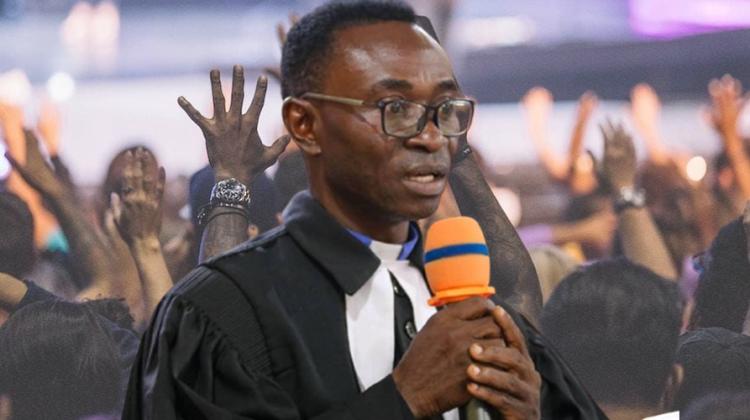
Sunday Gospel Reflection: True Religion
Sunday, 26th October,2025
Liturgical Occasion: 20th Sunday after Pentecost
Theme: True Religion
Eʋe: Subɔsubɔ Nyateƒetɔ (Vavãtɔ)
Texts: Psalm 65, Joel 2:23–32, 2 Timothy 4:6–8, 16–18, Luke 18:9–14
INTRODUCTION
Beloved in Christ, grace and peace be unto you.
Today’s theme, “True Religion,” invites us to reflect on the depth of our faith and the sincerity of our worship before God. In our modern world, religion is often reduced to rituals, titles, denominations, or appearances. Yet God looks beyond these outward expressions to the condition of our hearts.
True religion is not measured by how loud we pray, how beautifully we sing, or how often we attend church. It is measured by how humbly we walk with God, how sincerely we love others, and how faithfully we live in righteousness and truth.
MEANING OF TRUE RELIGION
True religion is not about tradition or external observance — it is about a living relationship with God expressed through faith, love, and holiness.
The Bible gives a clear definition in James 1:27:
“Religion that God our Father accepts as pure and faultless is this: to look after orphans and widows in their distress and to keep oneself from being polluted by the world.”
Hence, true religion involves:
- Compassionate Service – showing mercy and justice to the needy and vulnerable.
- Moral Purity – living a life of holiness, free from hypocrisy, greed, and worldliness.
- Genuine Faith – worshipping God in spirit and in truth (John 4:23–24).
True religion, therefore, is a life transformed by God’s grace and expressed through love, holiness, and service. In a world full of selfishness and hypocrisy, true religion shines as faith in action — a light that draws others to Christ.
“When I do good, I feel good. When I do bad, I feel bad. That’s my religion.” — Abraham Lincoln
This reminds us that true religion is about moral integrity and practical righteousness, not empty rituals.
In short, “true religion is faith expressed through love” (Galatians 5:6).
PRACTISING TRUE RELIGION IN CONTEMPORARY LIFE
To live out true religion in today’s world:
- Live with Integrity and Holiness
Let your words, attitudes, and actions reflect Christ’s character.
Resist corruption, immorality, and dishonesty.
Stand for truth even when it is unpopular.
- Show Compassion and Social Responsibility
Care for the poor, sick, aged, and marginalized.
Volunteer in charitable works and church outreach.
Defend justice and speak for those who can not speak for themselves.
- Maintain a Deep Spiritual Life
Cultivate personal devotion through prayer, Bible study, and worship.
Let your faith influence your home, work, and community life.
Seek the guidance of the Holy Spirit daily.
- Promote Peace and Unity
Avoid gossip, hatred, and discrimination.
Be an agent of reconciliation wherever there is conflict.
Show respect and love to people of all backgrounds.
- Be an Example of Christ in the Modern World
Use your influence, education, and resources to promote moral values.
Live humbly and let your life preach louder than your words.
PERCEPTION OF TAX COLLECTORS IN THE BIBLE
In Jesus’ time, tax collectors were among the most despised people. Their social and moral reputation sheds light on the meaning of true religion in the Gospel reading.
- Seen as Sinners and Traitors
They worked for the Roman government and were viewed as betrayers of their people (Matthew 9:10–11).
- Associated with Dishonesty and Corruption
Many cheated and exploited the poor (Luke 3:12–13).
- Socially Despised and Ostracized
They were excluded from religious fellowship and looked down upon (Luke 18:11).
- Yet, Recipients of God’s Grace
Jesus called Matthew, a tax collector, to be His disciple (Matthew 9:9).
Zacchaeus found salvation through repentance (Luke 19:1–10).
The repentant tax collector in the temple went home justified (Luke 18:13–14).
This teaches that true religion is not about our past reputation but our present repentance and humility before God.
Let’s at this time reflect on the texts for the day.
- Psalm 65 – The God Who Deserves True Praise
This psalm is a hymn of thanksgiving to the God who forgives, provides, and blesses abundantly.
“Praise awaits You, O God, in Zion.” (v.1)
True religion begins with gratitude and dependence on God. A thankful heart recognizes that every good thing comes from the Lord.
- Joel 2:23–32 – True Religion Brings Renewal and Hope.
After Israel’s repentance, God promises to restore what the locusts destroyed:
“I will repay you for the years the locusts have eaten.” (v.25)
True religion involves repentance and renewal. When we turn sincerely to God, He pours out His Spirit upon all people (v.28).
True Religion (Subɔsubɔ Nyateƒetɔ) is not an empty ritual but a Spirit-filled relationship that renews life, restores hope, and empowers believers to dream, prophesy, and serve.
- 2 Timothy 4:6–8, 16–18 – True Religion Is Faithfulness to the End
Paul, facing the end of his earthly ministry, declares:
“I have fought the good fight, I have finished the race, I have kept the faith.” (v.7)
True religion is not about how we start but how we finish.
It calls for faithfulness, endurance, and integrity, even in suffering.
In our time, when convenience often replaces conviction, God still seeks men and women who will stand firm in faith till the end.
- Luke 18:9–14 – The Parable of the Pharisee and the Tax Collector.
This parable contrasts false religion and true religion.
In this story, Jesus rebuked those law abiding people who thought their behaviour made them and their prayers acceptable to God.
The Pharisee recounted his good deeds, and expected
God to be pleased with him. He despised the tax
collector, and was sure that God did too (Luke 18:9-12). But the tax collector made no attempt to impress God. He simply confessed himself a sinner and asked God for mercy. God accepted the man
who humbly repented, but rejected the one who boasted of his virtue (Luke 18:13-14).
The Pharisee represents self-righteous religion — proud, judgmental, and outwardly pious.
The tax collector represents humble religion — aware of his sin, pleading for mercy.
Jesus said it was the tax collector who went home justified before God.
True religion, therefore, is rooted in humility, repentance, and total dependence on God’s mercy — not in boasting about one’s spiritual achievements.
From the theme, we could learn that:
- True religion flows from a heart transformed by grace.
- It is expressed through repentance, faith, humility, and compassion.
- It is sustained by the Holy Spirit, who renews and empowers believers.
True religion is not a Sunday performance but a daily lifestyle of worship, obedience, and service.
APPLICATION
In our modern context, true religion (Subɔsubɔ Nyateƒetɔ) calls us to:
- Reject hypocrisy and pride — do not use religion to condemn others or glorify self.
- Demonstrate compassion — serve the needy and brokenhearted.
- Live holy and sincere lives — let your actions speak louder than your words.
- Depend on the Holy Spirit — allow Him to continually renew your heart and mind.
CONCLUSION
Beloved, true religion is not a title, uniform, or position — it is a life of humility before God and service toward humanity.
Let us, like the tax collector, approach God daily with contrite hearts;
like Joel’s audience, seek renewal through repentance;
and like Paul, persevere faithfully to the end.
Then we shall experience the joy of God’s mercy and receive the crown of righteousness prepared for all who love His appearing.
KEY VERSE FOR MEDITATION
“The sacrifice You desire is a broken spirit; a broken and contrite heart, O God, You will not despise.” — Psalm 51:17
May God add His blessings to this message in Jesus Mighty Name Amen.
By: Rev. Sylvanus Yao Kpodonu