
The Ark of The Covenant: A Symbol of God’s Presence, Power, And Covenant with His People
The Ark of the Covenant occupied a central and sacred place in the religious life of ancient Israel. It was the most holy object within the Tabernacle and later the Temple, serving as the visible sign of God’s covenantal relationship with His chosen people. According to the biblical narrative, God instructed Moses to construct the Ark during Israel’s wilderness journey from Egypt to the Promised Land, following precise divine specifications (Exodus 25:10–22).
The Ark functioned not merely as a religious artefact but as a theological symbol of God’s holiness, kingship, guidance, and nearness to Israel.
Key Texts: Exodus 25:10–22; Deuteronomy 10:1–5; Hebrews 9:1–5
1. Description of the Ark
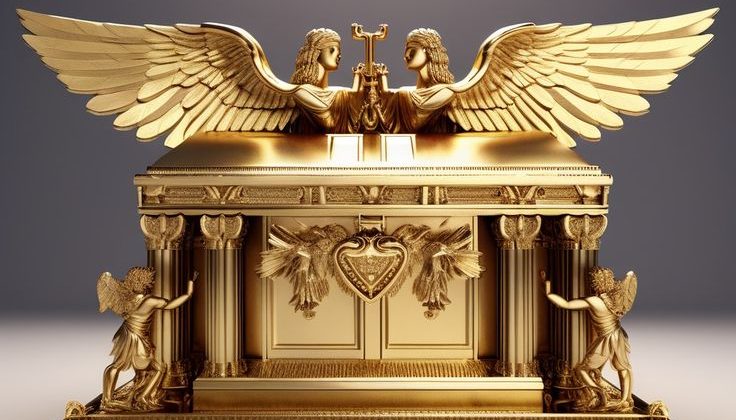
The Ark was a rectangular chest constructed from acacia wood and overlaid with pure gold, both inside and outside (Exodus 25:10–11). Its approximate dimensions—two and a half cubits long, one and a half cubits wide, and one and a half cubits high—reflect both beauty and portability, enabling it to accompany Israel throughout their journey.
Atop the Ark was the Mercy Seat (Hebrew: kapporet), fashioned from pure gold and flanked by two cherubim facing one another with outstretched wings. This covering symbolised God’s heavenly throne, emphasising His kingship and holiness. The space above the Mercy Seat was understood as the place where God manifested His presence and communicated with Moses (Exodus 25:22).
2. Contents of the Ark
Scripture records that the Ark contained three sacred items, each carrying deep theological meaning:
The Tablets of the Law – representing God’s covenant, moral authority, and revealed will (Exodus 25:16; Deuteronomy 10:1–5).
Aaron’s Rod that Budded – signifying God’s chosen priesthood, divine authority, and leadership (Numbers 17:10).
A Jar of Manna – reminding Israel of God’s faithful provision and sustenance during their wilderness journey (Exodus 16:32–34).
Collectively, these items symbolised God’s law, leadership, and life-sustaining grace, underscoring the holistic nature of His covenant with Israel.
3. The Ark as a Sign of God’s Presence
God explicitly declared concerning the Ark:
“There, above the mercy seat… I will meet with you.” (Exodus 25:22)
The Ark therefore represented God dwelling among His people. It was carried ahead of Israel during significant moments—through the wilderness, into the Promised Land, and during military engagements – affirming that Israel’s identity and success depended on God’s presence rather than human strength (Joshua 3:3–6).
The Ark taught Israel that God was not distant but actively involved in their history and communal life.
4. The Power of the Ark
The Ark was closely associated with manifestations of divine power:
The River Jordan parted when the priests bearing the Ark stepped into it (Joshua 3:14–17).
The walls of Jericho collapsed as the Ark was carried around the city in obedience to God’s command (Joshua 6).
Conversely, when the Ark was handled irreverently, as in the case of Uzzah, divine judgment followed (2 Samuel 6:6–7).
These events reveal that God’s presence is both powerful and holy, demanding reverence, obedience, and proper worship.
5. The Mercy Seat: A Place of Grace and Atonement
Although the Ark contained the Law—which exposes human sin—the Mercy Seat covered it. On the Day of Atonement, the high priest sprinkled sacrificial blood upon the Mercy Seat to make atonement for the sins of the people (Leviticus 16).
This ritual pointed beyond itself to the redemptive work of Jesus Christ, in whom divine justice and mercy meet. The Apostle Paul identifies Christ as the ultimate atoning sacrifice (Romans 3:25), a theme further developed in Hebrews 9:11–12, where Christ is portrayed as the perfect High Priest.
6. The Ark and Its Fulfilment in Christ
In the New Testament, the theological significance of the Ark finds its fulfilment in Jesus Christ:
The Law is fulfilled in Him (Matthew 5:17).
The presence of God dwells fully in Him (Colossians 2:9).
Grace and mercy flow through His redemptive work (John 1:16).
John’s declaration that “the Word became flesh and dwelt among us” (John 1:14) echoes the imagery of the Ark, affirming that God now dwells with humanity not through a sacred object but through the incarnate Son. Consequently, believers themselves become the dwelling place of God through the Holy Spirit (1 Corinthians 3:16).
Conclusion
The Ark of the Covenant stands as a profound symbol of God’s covenant-keeping nature—holy, powerful, faithful, and merciful. While the physical Ark belongs to Israel’s historical past, its theological message remains enduring. God desires to dwell among His people, guide them in obedience, and extend mercy through covenantal relationship. Ultimately, this desire is fully realised in Jesus Christ, through whom God continues to be present with His people today.
References:
The Holy Bible, New Revised Standard Version. (1989). National Council of Churches.
Brown, F., Driver, S. R., & Briggs, C. A. (2000). The Brown-Driver-Briggs Hebrew and English lexicon. Hendrickson.
Kaiser, W. C. (1991). Toward an Old Testament theology. Zondervan.
Merrill, E. H. (1994). Deuteronomy. New American Commentary. Broadman & Holman.
Wenham, G. J. (1979). The book of Leviticus. Eerdmans.
By: Rev. Sylvanus Yao Kpodonu