
Sunday Gospel Reflection: Blessed Is The Fruit of Your Womb
Eʋe: Woyra wò dɔmevi
Scripture Readings
Micah 5:2–5a, Hebrews 10:5–10, Luke 1:39–55
Introduction
As we draw closer to Christmas, the Church is invited to reflect once again on God’s chosen way of bringing salvation into the world – not through political power, military strength, or human splendour, but through a woman, a womb, and a willing heart.
The theme “Blessed is the Fruit of Your Womb” draws us into the heart of the Incarnation, the great mystery that God became human in Jesus Christ for our salvation. Advent reminds us that God keeps His promises, often in ways that surprise us.
I. The Fulfilment of God’s Ancient Promise
The birth of Jesus Christ was not accidental. It was the fulfilment of centuries of divine promise and prophecy.
As early as 1689 B.C., Jacob, while blessing his sons, declared:
“The sceptre shall not depart from Judah…” (Genesis 49:10)
This prophecy pointed to a coming ruler from the tribe of Judah, ultimately fulfilled in Jesus Christ.
Centuries later, around 710 B.C., the prophet Micah proclaimed:
“But you, Bethlehem Ephrathah, though you are small among the clans of Judah, out of you will come for me one who will be ruler over Israel.” (Micah 5:2)
Bethlehem was small and insignificant by human standards, yet God chose it as the birthplace of the Messiah. This teaches us that God’s redemptive work often begins in humble places.
Earlier still, in 742 B.C., the prophet Isaiah foretold the manner of His birth:
“The virgin will conceive and give birth to a son, and will call him Immanuel.” (Isaiah 7:14)
Immanuel means “God with us” – a powerful declaration that God would dwell among His people in human form.
II. God’s Promise Comes from Humble Beginnings
(Micah 5:2–5a)
Micah assures us that the coming ruler would:
- Shepherd God’s people
- Stand in the strength of the Lord
- Bring peace to the nations
The fruit of Mary’s womb is the fulfilment of this ancient promise. God chooses what is humble to accomplish what is eternal.
III. The Obedient Body that Brings Salvation
(Hebrews 10:5–10)
The writer of Hebrews explains that Christ’s coming was an act of perfect obedience:
“A body you have prepared for me… Here I am – I have come to do your will.”
Jesus did not come merely to continue religious rituals. He came to do the will of God completely. His incarnation was purposeful – a body prepared for sacrifice, obedience, and redemption.
Through this obedient body – first carried in Mary’s womb—we are made holy. Thus, the blessed fruit of her womb becomes the source of our salvation.
IV. The Angelic Announcements and the Blessed Womb
In the fullness of time, God sent an angel to two women:
- Elizabeth, an elderly woman considered barren
- Mary, a young virgin
Elizabeth was told she would give birth to John, who would prepare the way for the Lord. Mary was told she would conceive by the Holy Spirit and give birth to Jesus, the Son of the Most High.
Jesus Christ was truly the blessed Fruit of the womb, conceived not by human will but by divine power.
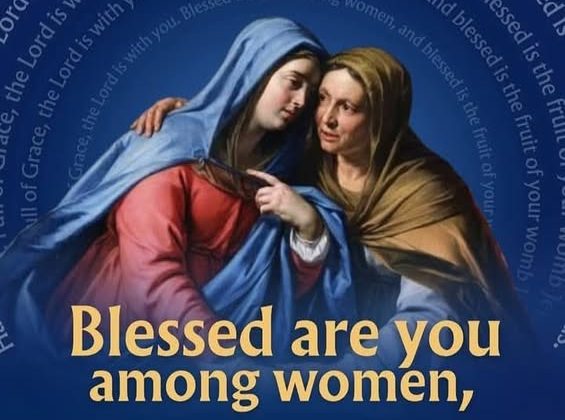
When Mary visited Elizabeth:
“The baby leaped in her womb, and Elizabeth was filled with the Holy Spirit.” (Luke 1:41)
Even before birth, John recognised the presence of the Saviour. Where Christ is present, joy and life overflow through the Holy Spirit.
V. God’s Mercy to the Humble
(Luke 1:39–55)
Elizabeth proclaimed Mary blessed, and Mary responded with a song of praise – the Magnificat. In it, Mary glorified a God who:
- Shows mercy to the humble
- Lifts the lowly
- Fulfils His promises
Mary was blessed not merely because she carried Jesus, but because she believed God’s word. Her womb became the meeting place of faith and fulfilment, promise and presence.
VI. The Life of the Blessed Son
Jesus Christ, the blessed Fruit of Mary’s womb, grew:
“In wisdom and stature, and in favour with God and humanity.” (Luke 2:52)
From the age of twelve, when He amazed the teachers in the temple, to thirty-three, when He gave His life on the cross, Jesus lived a sinless life. He:
Studied the Word of God, Lived a life of prayer, Showed compassion to the poor and the broken
Did good wherever He went. Remained obedient to the Father. Though fully human, He never sinned. Through His life, death, and resurrection, He fulfilled all the promises spoken by the prophets.
Theological Reflection
The Incarnation teaches us that:
- God enters human history through humility
- Salvation comes through obedience
- Faith makes room for God’s mighty work
The blessing of the womb points beyond Mary to Christ Himself, the true blessing given to the world.
Application for Today
- God still works through humble vessels – Never despise small beginnings.
- Obedience matters – Saying “yes” to God changes history.
- Faith brings joy – Where Christ is welcomed, joy overflows.
Conclusion
As we celebrate the 4th Sunday of Advent, we join Elizabeth in declaring:
“Blessed is the Fruit of your womb.”
In Jesus Christ, God’s promise is fulfilled, God’s will is done, and God’s peace is given to the world.
Closing Prayer
Gracious God, We thank You for the gift of Your Son, born of the Virgin Mary. As we await His coming, help us to believe Your promises, to obey Your will, and to rejoice in Your salvation.
May Christ be formed in us, to Your glory.
Amen.
Summary Statement for Emphasis
The blessing of Mary’s womb was not for her alone – it was God’s gift to the whole world. In Jesus Christ, God is truly with us, bringing salvation, mercy, and peace.
By: Rev. Sylvanus Yao Kpodonu