

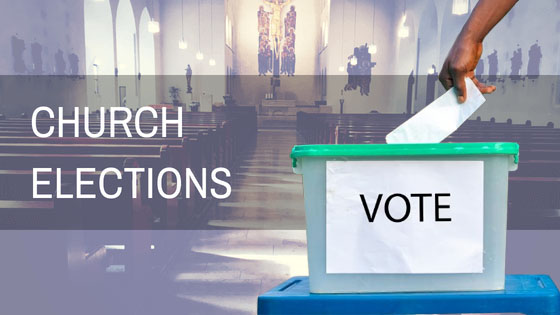
Election In The Church: A Biblical, Ethical And Practical Guide For Peaceful Coexistence
Election in the church is a sacred process through which God’s people identify and appoint leaders who will serve, guide, and influence the spiritual direction of the congregation. Unlike secular elections, church elections are not intended to advance personal interests, ambitions, or power struggles. Instead, they exist to help the church discern the will of God for His people. When carried out faithfully, they promote unity, accountability, effective ministry, and peaceful coexistence. However, when handled poorly, they can cause division, distrust, bitterness, and spiritual decline.
This article explores the biblical foundations of church elections, examines the spiritual, ethical, social, and administrative domains involved, highlights the indicators of healthy and unhealthy electoral processes, and provides practical strategies for conducting peaceful and God-honouring elections within the body of Christ.
1. Biblical Foundations of Election in the Church
Scripture provides several examples of leadership selection that continue to guide the church today:
1.1 The Election of Matthias (Acts 1:15–26)
The early church selected Matthias to replace Judas through prayer, communal discernment, and reliance on divine direction. This demonstrates that church elections must unite human responsibility with God’s guidance.
1.2 The Appointment of Deacons (Acts 6:1–7)
The apostles instructed the church to choose seven men of good reputation, wisdom, and spiritual maturity. This highlights that leadership selection must emphasise character over popularity and spirituality over personal ambition.
1.3 The Selection of Elders (Titus 1:5–9; 1 Timothy 3:1–13)
Paul provided clear guidelines regarding the moral standards and spiritual maturity expected of leaders. Church elections must therefore uphold biblical qualifications rather than favouritism.
1.4 The Leadership Principles of Moses (Exodus 18:21–25)
Moses appointed capable, trustworthy, God-fearing individuals to assist in governance. This underscores the value of shared leadership and accountability.
1.5 The Example of Samuel (1 Samuel 16:1–13)
God reminded Samuel that human beings look at outward appearance, but God looks at the heart. Church elections must therefore prioritise inner character over external influence.
These biblical examples show that election in the church is both spiritual and communal, shaped by prayer, integrity, discernment, and Scripture.
2. Domains of Church Elections
Effective church elections cover several key domains:
2.1 Spiritual Domain
- Prayerful preparation
- Dependence on the Holy Spirit
- Discernment of God’s will
- Selection based on biblical qualifications
- The entire process must cultivate an atmosphere of reverence and worship.
2.2 Ethical Domain
- Transparency
- Integrity
- Truthfulness
- Avoidance of manipulation, bribery, or intimidation
- Strong ethics ensure credibility and trust in the final results.
2.3 Administrative Domain
- Clear electoral guidelines
- Verified voter eligibility lists
- Proper nomination procedures
- Neutral and competent electoral committees
- Fair counting and accurate documentation
- Good administration prevents misunderstanding and conflict.
2.4 Social Domain
- Active participation of the congregation
- Respect for diversity of opinion
- Promotion of unity and peaceful coexistence
- Avoidance of factions, political camps, and personality cults
- Healthy social engagement strengthens fellowship and reduces post-election tensions.
2.5 Leadership Domain
- Adequate preparation of leaders for their responsibilities
- Training and orientation
- Ongoing monitoring and evaluation after elections
- Church elections should focus on long-term ministry effectiveness.
3. Indicators of Healthy Church Elections
A credible and spiritually sound church election is characterised by:
- A prayerful atmosphere before, during, and after voting.
- Clear and consistent communication of electoral procedures.
- Absence of campaigning, gossip, or vote-buying.
- Selection of candidates based on biblical qualifications.
- Peaceful acceptance of results without hostility or division.
- Transparency in vote counting and announcement of results.
- Post-election unity, forgiveness, and renewed commitment to ministry.
- Where these indicators are present, the church grows in trust and harmony.
4. Indicators of Unhealthy Church Elections
Unhealthy elections typically reveal:
- Hidden agendas and private meetings
- Tribalism, favouritism, or family dominance
- Candidates seeking power rather than service
- Negative campaigning, rumours, or character assassination
- Manipulation of voter lists
- Arguments or disputes during counting
- Post-election bitterness or withdrawal from church activities
These signs indicate spiritual immaturity and administrative breakdown.
5. Practical Strategies for Peaceful and Godly Church Elections
The following strategies can help churches ensure peaceful coexistence before, during, and after elections:
5.1 Prioritise Prayer and Biblical Teaching
- Begin the electoral season with fasting and prayer.
- Teach the congregation the biblical purpose of leadership (Acts 6; 1 Tim 3).
- Encourage spiritual discernment instead of popularity contests.
5.2 Establish an Independent and Neutral Electoral Committee
- Choose spiritually mature, trustworthy, and impartial members.
- Ensure no committee member openly or secretly supports any candidate.
5.3 Define Clear Electoral Guidelines
- Prepare written rules covering nominations, campaigning, voting methods, and dispute resolution.
- Publish these rules early to prevent confusion or suspicion.
5.4 Screen Candidates Based on Biblical Qualifications
Use 1 Timothy 3 and Titus 1 as the standard:
- Spiritual maturity
- Good reputation
- Faithfulness in service
- Moral integrity
- Financial honesty
- Ability to work peacefully with others
5.5 Promote Issue-Based Engagement
Discourage personal attacks and encourage focus on:
- Service records
- Vision for ministry
- Alignment with the church’s mission
5.6 Prohibit Unhealthy Campaign Practices
- No vote-buying
- No tribal or family influence
- No gossip or propaganda
- No intimidation
5.7 Ensure Transparent Voting and Counting
- Use reliable ballot systems
- Permit observers
- Document and sign results
- Keep accurate meeting minutes
5.8 Facilitate Post-Election Healing and Unity
- Pray publicly for both winners and non-winners
- Promote forgiveness and reconciliation
- Organise unity-building meetings
- Strengthen fellowship through shared activities such as communion
A church that manages elections well becomes stronger, more united, and more effective in ministry.
Conclusion
Election in the church is a sacred responsibility requiring spirituality, integrity, and wisdom. Scripture shows that leadership selection is not merely a human exercise but a divine process guided by prayer and godly character. When church elections are conducted with transparency and humility, they strengthen fellowship, promote peaceful coexistence, and advance the mission of Christ.
The church must therefore commit to transparent systems, mature spiritual practices, and love-driven relationships that reflect the kingdom of God. A peaceful election is not only an administrative achievement—it is a testimony of the church’s spiritual maturity and obedience to God.
References:
Holy Bible, New International Version. (2011). Biblica.
Acts 1:15–26; Acts 6:1–7; 1 Timothy 3:1–13; Titus 1:5–9; Exodus 18:21–25; 1 Samuel 16:1–13.
Gangel, K. O., & Wilhoit, J. C. (Eds.). (1994). The Christian educator’s handbook on leadership. Baker Academic.
Getz, G. (2003). Elders and leaders: God’s plan for leading the church. Moody Publishers.
Sanders, J. O. (2007). Spiritual leadership: Principles of excellence for every believer. Moody Publishers.
Stetzer, E., & Bird, W. (2010). Viral churches: Helping church planters become movement makers. Jossey-Bass.
By: Rev. Sylvanus Yao Kpodonu
