

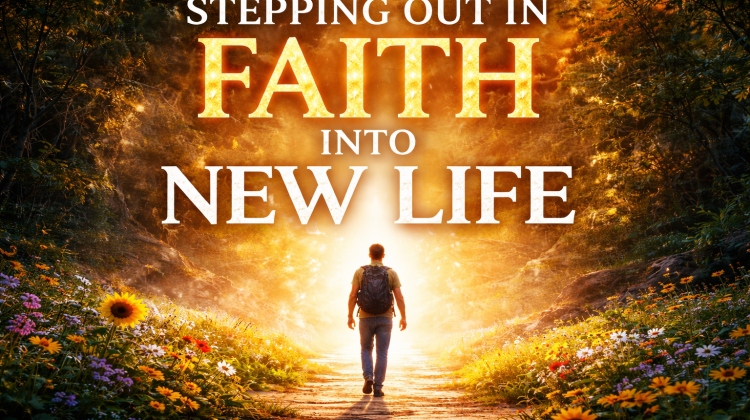
SUNDAY GOSPEL REFLECTIONS: STEPPING OUT IN FAITH INTO NEW LIFE
Second Sunday of Lent – 1st March 2026
Theme:
English: Stepping Out in Faith into New Life
Eʋe: Zɔɖeɖe le xɔse me yi agbe yeye me
Scripture Readings:
Genesis 12:1–4
Romans 4:1–5, 13–17
John 3:1–17
Beloved in the Lord,
On this Second Sunday of Lent, the Church calls us not merely to reflection, but to pilgrimage. Lent is a sacred season of repentance, renewal, and reorientation towards God. It is a journey that demands movement — movement from self-reliance to God-dependence, from sin to sanctification, and from fear to faith.
Our theme, Stepping Out in Faith into New Life, speaks of obedience, surrender, and transformation. Each of our readings presents a profound theological truth: new life begins when faith responds to God’s initiative. Salvation history consistently reveals that God calls, and humanity must respond in trust.
1. Abraham: Stepping into the Unknown (Genesis 12:1–4)
In Genesis 12, God calls Abram to leave his country, his people, and his father’s household for a land that would be shown to him. The call was radical and costly. It required detachment from security, familiarity, and cultural identity.
Notably, God did not provide Abram with a detailed map or timetable. The command was simple: “Go.” And Abram obeyed.
This narrative establishes a foundational biblical principle: faith precedes sight. Abram’s obedience demonstrates what theologians describe as fiducia — a trusting reliance upon God’s character rather than visible evidence. His departure from Ur was not merely geographical; it was spiritual. It marked the beginning of covenantal relationship and redemptive history.
Lent similarly calls us to spiritual migration. We cannot experience resurrection life while clinging to former patterns of disobedience, resentment, or complacency. True faith involves relinquishment before renewal. Abraham stepped away from comfort into promise; from certainty into covenant; from the known into divine destiny.
2. Justified by Faith: The Theology of New Life (Romans 4:1–5, 13–17)
In Romans 4, the Apostle Paul presents Abraham as the exemplar of justification by faith. Drawing from Genesis 15:6, Paul writes: “Abraham believed God, and it was credited to him as righteousness.”
Here we encounter a central doctrine of Christian theology: justification is by grace through faith, not by works. Righteousness is not earned; it is imputed. It is a divine gift grounded in God’s promise and fulfilled in Christ.
Paul emphasises that Abraham was declared righteous before the law and before circumcision. This establishes that salvation is rooted in faith and accessible to all who believe. God declared Abraham “father of many nations” before Isaac was born — demonstrating that God’s promises transcend present limitations.
New life, therefore, does not begin with moral perfection but with trusting surrender. Faith lays hold of what God has promised, even when circumstances appear barren.
On this Women’s Bible Class Thanksgiving Day, we give thanks for women who have embodied such faith — in intercession, service, hospitality, leadership, generosity, and perseverance. Like Sarah who trusted beyond biological limitation, Hannah who prayed through anguish, and Mary who submitted to God’s will with courageous obedience, they demonstrate that faith becomes the womb through which new life is birthed.
3. Nicodemus: Stepping into Spiritual Rebirth (John 3:1–17)
In John 3, Nicodemus, a Pharisee and respected teacher of Israel, approaches Jesus under the cover of night. Though intellectually informed and religiously devout, he lacked the essential reality of spiritual regeneration.
Jesus’ words are unequivocal: “You must be born again.”
This declaration introduces the doctrine of regeneration — the sovereign work of the Holy Spirit by which one is given new spiritual life. New birth is not achieved through status, heritage, or religious activity; it is a gracious act of God.
Nicodemus’ encounter reveals a humbling truth: stepping out in faith often begins with acknowledging our insufficiency. It requires spiritual vulnerability — admitting our need for grace, renewal, and transformation.
John 3:16 proclaims the heart of the Gospel: “For God so loved the world that He gave His only Son…” Salvation is possible because God first stepped towards humanity in sacrificial love. The Incarnation is divine initiative; faith is human response.
Thus, new life is not self-improvement — it is rebirth through Christ.
APPLICATION
The Lenten season compels each of us to examine our spiritual posture.
- What is God calling you to leave behind?
- Fear that paralyses obedience?
- Doubt that undermines trust?
- Sin that entangles the soul?
- Comfort that resists growth?
- Bitterness that hinders grace?
Lent is not merely about abstaining from food or habit; it is about embracing transformation. It is about stepping into agbe yeye — new life in Christ.
Abraham stepped into promise.
Paul teaches justification by faith.
Nicodemus stepped into rebirth.
Today, we too are invited into movement — from darkness into light, from works into grace, from stagnation into spiritual vitality.
CONCLUSION
Faith always requires movement.
One cannot remain in Ur and arrive in Canaan.
One cannot cling to works and fully embrace grace.
One cannot remain in spiritual darkness and experience new birth.
As we continue this sacred Lenten pilgrimage, may the Holy Spirit grant us the courage to obey, the humility to trust, and the grace to surrender. May our thanksgiving today not merely celebrate past blessings, but mark a renewed commitment to step forward in faith.
And may the God who calls us be faithful to lead us into the new life He has prepared.
Amen.